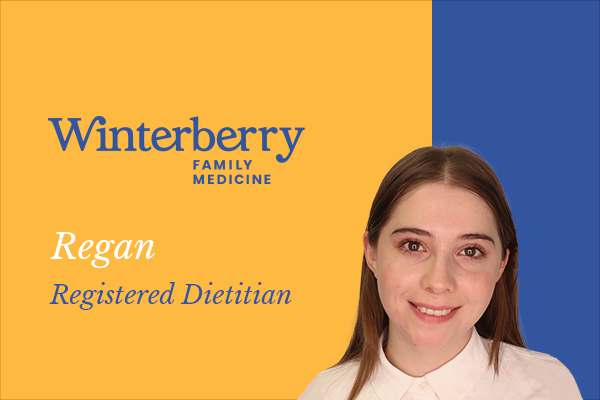
Each month we catch up with a team member at Winterberry so our patients and our community can get to know them and their work better. This month we spoke with Regan. We hope you enjoy our quick Q+A!
Regan, tell us about your work at Winterberry — what’s your role?
I work as a Registered Dietitian at Winterberry Family Medicine, where I support individuals in achieving their nutrition and overall health goals. While I see many patients for weight management, I also help people with a wide range of nutrition concerns, including diabetes, heart disease, digestive concerns, food allergies, nutrition during pregnancy, and general healthy eating.
My role involves providing personalized nutrition education, helping clients overcome challenges, and creating realistic, sustainable strategies that fit their lifestyle while still allowing them to enjoy the foods they love.
What led you to become a Registered Dietitian?
I’ve always known I wanted a career that involved working closely with people, and I’ve always been fascinated by the science behind food and nutrition. I love seeing how the foods we eat can have such a significant impact on our health and well-being.
At the same time, food is so much more than nutrition — it’s connected to memories, culture, celebration, comfort, and community. Whether it’s a family recipe that brings back memories or sharing a meal with others, food has a unique way of bringing people together and creating joy.
I also enjoy that no two days are ever the same in this field and that there is always something new to learn!
What made you want to be part of the Winterberry team?
I was drawn to the Winterberry team because our values feel very closely aligned. I really appreciate Winterberry’s “It’s not your fault” approach to weight management, as it reflects a compassionate, non-judgmental perspective that I also strive to bring into all areas of nutrition care.
I also value the strong sense of collaboration within Winterberry Family Medicine. Being part of a team where communication is open and encouraged means I can easily connect with other healthcare providers whenever needed, which ultimately supports more coordinated and effective patient care.
Overall, it’s an environment that prioritizes both patient well-being and teamwork, which is something I really value in my work.
Is there an average day for you in the clinic? What does your work typically look like?
While the structure of my days is fairly consistent — often filled with back-to-back appointments followed by charting and communication with the healthcare providers I collaborate with — no two days ever feel the same.
Every patient brings their own unique experiences, questions, and nutrition goals, which keeps my work interesting and rewarding. I love the variety that comes with supporting people through many different health concerns and stages of their journey.
What do you wish more people knew about working with a Registered Dietitian?
I wish more people knew that working with a Registered Dietitian is highly personalized. We don’t just give general nutrition advice — we tailor recommendations to each individual’s preferences, lifestyle, health goals, and challenges.
If someone doesn’t enjoy certain foods or has specific dietary preferences, we work together to find alternatives that fit their tastes and needs. Nutrition is not a one-size-fits-all approach, and both I and the other dietitians at Winterberry are committed to helping people create goals and habits that feel realistic, enjoyable, and sustainable for their everyday lives.
Are there any common nutrition myths or misconceptions you wish patients didn’t have to worry about so much?
One of the most common nutrition myths I hear is that carbohydrates, like bread, pasta, and rice, should be avoided. In reality, carbohydrates are our body’s main source of energy and provide many important nutrients. They can also make meals more enjoyable, satisfying, and culturally meaningful.
Another misconception I hear often is that people living with diabetes should avoid fruit because it contains sugar. Many patients I work with genuinely enjoy fruit but avoid eating it out of fear that it will spike their blood sugar.
However, fruit can absolutely be part of a balanced diet for someone with diabetes, and I enjoy helping patients feel more confident and less fearful about including nourishing foods they love.
What is one small, realistic nutrition habit that can make a meaningful difference for many people?
One small but meaningful nutrition habit I often encourage patients to focus on is thinking about what they can add to their meals and snacks, rather than focusing on what they need to avoid.
It’s often much more realistic (and enjoyable!) to build on the foods you already love instead of feeling restricted.
For example, this might mean adding more vegetables to a meal, including a source of protein with snacks, or incorporating more fibre-rich foods throughout the day. Over time, these small additions can lead to meaningful, lasting changes and help people build a healthier relationship with food without feeling deprived.
When you’re not at Winterberry helping patients, what will we find you doing?
When I’m not at Winterberry helping patients, you’ll usually find me spending time outdoors. I love going for walks to local coffee shops, gardening, and playing pickleball whenever I can. When the weather isn’t great, I usually opt for coffee and baking at home instead.
I also recently completed my Master’s research project, which I worked on over the course of two years and will be published soon. I’m very excited to share it. My research focused on dietitian involvement in prenatal care, an area I’m very passionate about!